
Understand ABA therapy
What is ABA therapy?
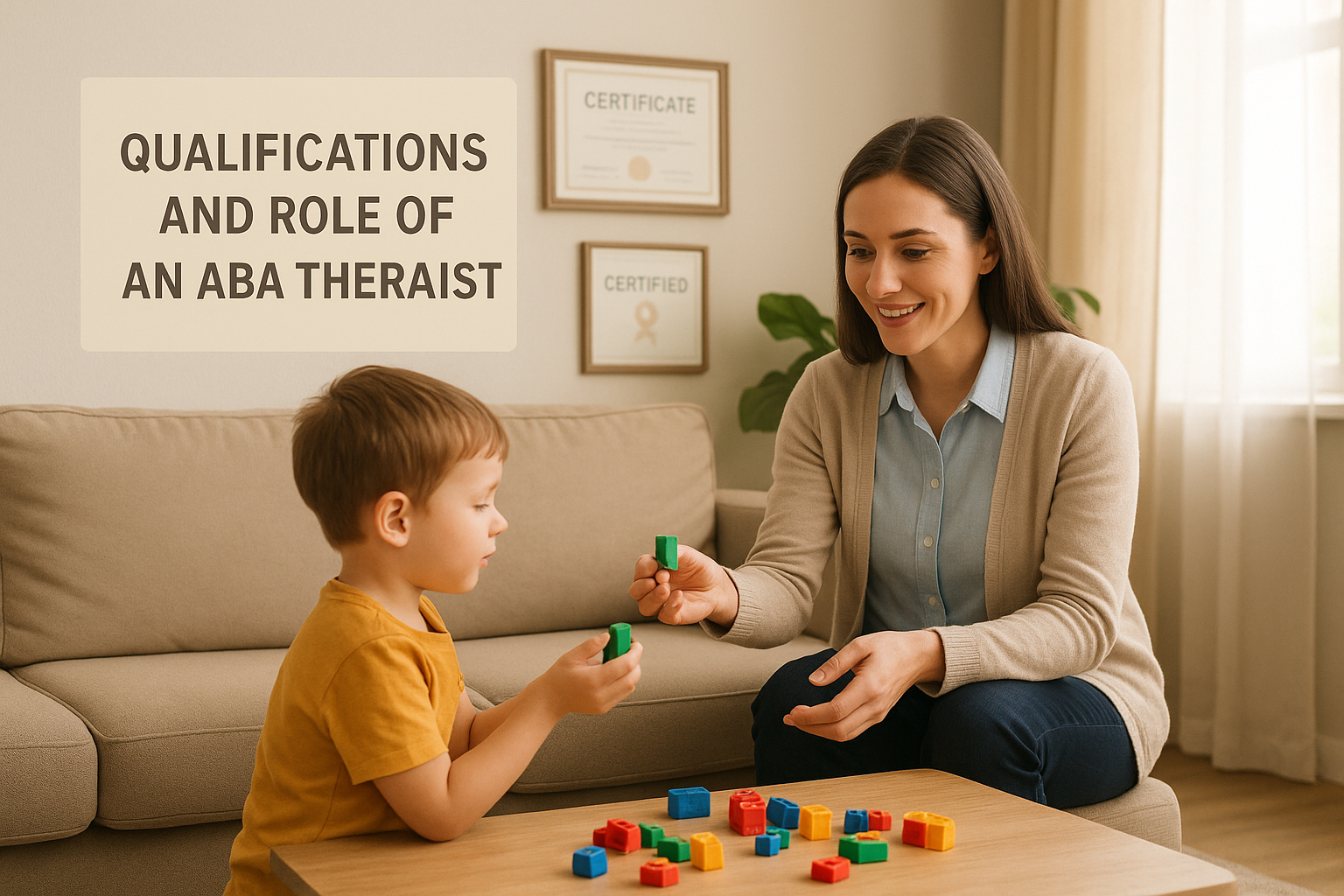
Applied Behavior Analysis, or ABA, is a science-based approach focused on understanding and improving specific behaviors. Through careful assessment and structured interventions, ABA therapists help children with autism develop communication, social, and self-care skills. You’ll often see therapy delivered one-on-one in your home, where positive reinforcement and data-driven strategies guide each session.
Therapists track progress using measurable goals set with your family, so you always know how your child is advancing. This hands-on method adapts as your child grows, shifting targets and techniques to match new milestones. With clear objectives and consistent feedback, ABA turns complex challenges into understandable steps you can celebrate.
Why certification matters
When you invite someone into your home, you want to feel confident they know exactly what they’re doing. Certifications for ABA therapists demonstrate that a clinician has met national standards in training, supervised experience, and ethical practice. That stamp of approval reduces guesswork, so you can focus on supporting your child instead of worrying about credentials.
Certified professionals follow a code of ethics that protects your family’s privacy and ensures intervention choices are evidence-based. In a field where techniques evolve constantly, a credentialed therapist commits to ongoing learning and oversight by the Behavior Analyst Certification Board (BACB). That commitment translates directly into safer, more effective therapy for your child.
Explore certification levels
Registered Behavior Technician (RBT)
The RBT is an entry-level credential requiring at least a high school diploma, completion of 40 hours of BACB-approved training, and successful passage of a competency exam. RBTs work under the close supervision of Board Certified Behavior Analysts, implementing behavior-analytic interventions and collecting vital data during sessions [1].
Because RBTs focus on direct implementation, they can build trusting relationships through consistent routines and hands-on support. If your child benefits from predictable structure and clear instructions, an RBT-led session can feel like a personalized play-and-learn environment tailored to your family’s needs.
Board Certified Assistant Behavior Analyst (BCaBA)
Stepping up from the RBT, BCaBA candidates need a bachelor’s degree, completion of BACB-verified coursework, and supervised fieldwork hours. After passing a 140-question exam, BCaBAs design behavior-change plans and can supervise RBTs in delivering interventions [2].
BCaBAs act as a bridge between high-level BCBA oversight and day-to-day therapy. You might see them adjusting goals based on data trends, coaching RBTs on nuanced techniques, or training parents to reinforce skills in natural settings. Their dual role brings flexibility to in-home services without the full cost of a BCBA.
Board Certified Behavior Analyst (BCBA)
BCBAs hold a master’s degree in ABA, psychology, education, or a related field, plus 1,500–2,000 hours of supervised practical experience. Passing the 160-question BCBA exam qualifies them to independently conduct assessments, craft comprehensive treatment plans, and supervise all other ABA staff [2].
With a BCBA leading your child’s program, you gain a strategic partner who oversees progress, interprets data across multiple settings, and makes evidence-based adjustments in real time. They also provide parent training so you can generalize skills from the therapy room into everyday life, helping your child thrive at home, school, or out in the community.
Doctoral-level BCBA-D
The BCBA-D designation is an add-on for practitioners who already hold active BCBA certification and have completed doctoral-level coursework or research. While BCBA-D’s don’t gain additional practice privileges, the credential reflects advanced expertise in behavior analysis, research methods, and leadership [1].
If you value a therapist with a deep understanding of the latest ABA studies, a BCBA-D can bring that cutting-edge perspective to your child’s intervention. They tend to mentor entire clinical teams, refine program designs, and contribute to broader community education about autism support.
Compare credentials at a glance
| Credential | Education | Training hours | Exam format | Renewal cycle |
|---|---|---|---|---|
| RBT | High school diploma | 40 hours | Competency exam | Annual competency review |
| BCaBA | Bachelor’s degree | Verified fieldwork | 140-question exam | Every 2 years, 20 CEUs |
| BCBA | Master’s degree | 1,500–2,000 hours | 160-question exam | Every 2 years, 32 CEUs + sup |
| BCBA-D | Active BCBA + doc | Doctoral criteria | Application only | Same as BCBA + $75 fee |
This table gives you a snapshot of requirements for each certification level. Use it to zero in on the credential that matches your budget, your child’s needs, and the level of clinical oversight you prefer.
Verify therapist credentials
When you start interviewing candidates, ask for proof of current BACB certification and review their registry status online. The BACB maintains a publicly accessible directory where you can confirm a therapist’s active standing and any disciplinary history. Seeing your provider listed with updated credentials offers immediate peace of mind.
Next, inquire about supervised experience directly related to in-home therapy. A therapist might hold the right certification but have limited exposure to family settings. Ask how many hours they’ve worked under supervision and whether they’ve supported children with goals similar to yours. That conversation helps ensure their skill set aligns with your child’s profile.
Finally, pay attention to communication style. A great ABA therapist doesn’t just deliver interventions, they coach you on techniques and adapt explanations so you feel empowered. If something doesn’t make sense, speak up. A credentialed professional will welcome your questions and collaborate on solutions that fit your family routine.
Partner in ongoing care
Certification is just the beginning of high-quality ABA services. Every credentialed therapist must complete Continuing Education Units (CEUs) to keep skills fresh and comply with BACB standards. You can track a provider’s commitment by asking which workshops or conferences they’ve attended recently, or what peer-reviewed articles have influenced their practice [3].
In 2024 guidelines, at least 25 percent of CEU hours must come from classroom instruction and BACB-authorized events, with the remainder drawn from scholarly publishing, instruction, or non-authorized seminars capped at 75 percent. This balanced mix ensures therapists stay grounded in both foundational theory and emerging best practices.
As you partner with your child’s therapist, establish a regular check-in schedule to review progress data together. Celebrate wins, adjust strategies based on what’s working, and never hesitate to request fresh ideas if skill development stalls. Building a trusting, two-way relationship strengthens your child’s gains and keeps therapy responsive to your family’s life.
Access local resources
Greater Asheville offers several community supports you can tap into alongside in-home ABA therapy. The Autism Society of North Carolina hosts monthly meet-ups, family workshops, and regional conferences that connect you with other parents and professionals. Attending these gatherings can spark practical tips you’ll carry back into daily routines.
Your pediatrician’s office may also maintain a list of preferred ABA providers in the Asheville area. Pediatricians see local therapists in action when they refer patients, so they often have insights into which clinicians excel at in-home services. Don’t hesitate to ask your child’s doctor for recommendations.
Finally, Facebook groups and online forums dedicated to Asheville families can be a valuable sounding board. Parents share honest reviews of therapy experiences, discuss scheduling logistics, and pass along contact information for therapists who have made a real difference. While social media advice should never replace professional guidance, it can point you toward trusted names to consider.
Bringing ABA therapy into your home is a big step, but understanding certifications for ABA therapists arms you with confidence. By matching credential levels to your child’s needs, verifying credentials, and staying involved in ongoing care, you’ll set the stage for meaningful progress. Your active participation, paired with a certified professional’s expertise, creates the best possible foundation for your child’s growth and success.