
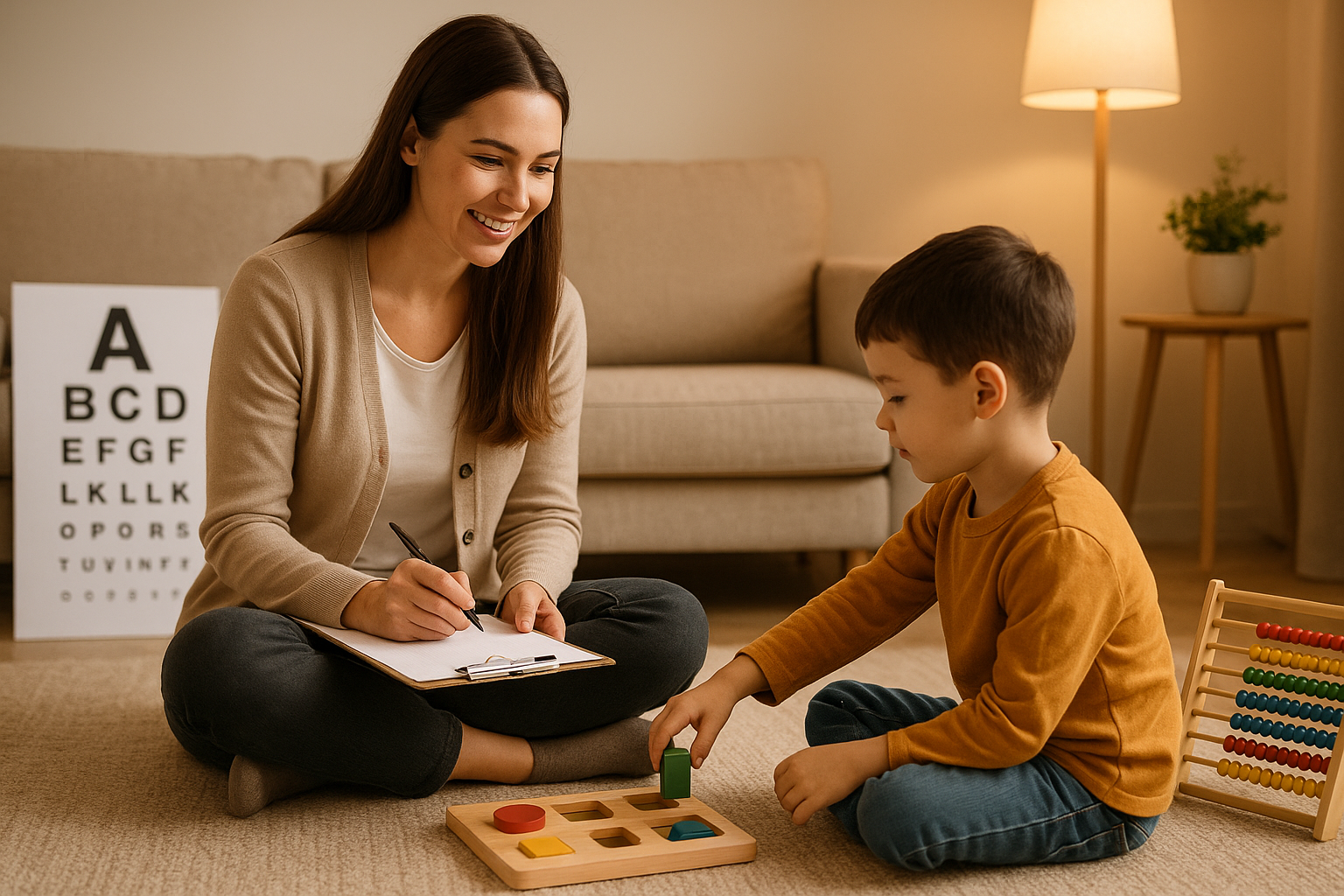
Navigating home-based ABA therapy qualifications can feel overwhelming when you’re trying to find the right support for your child. You want to be confident that the person working with your son or daughter has the training, certification and experience to deliver evidence-based strategies in your own home. In this article, you’ll learn what credentials matter most, how therapists earn them and which questions to ask before you commit.
In-home ABA uses the same proven methods you’d find in a clinic, but adapted for the routines, environment and learning opportunities of your child’s daily life [1]. When you understand the paths to certification and the role each credential plays, you can make informed choices—and feel confident in your partner’s expertise.
When it comes to your child’s development, knowing who is at the other end of the therapy session matters.
Understanding aba credentials
ABA therapy delivered at home is provided by professionals holding credentials recognized across settings—there’s no separate “in-home” certification. Whether someone carries the RBT, BCaBA or BCBA credential, each level represents a distinct combination of education, training hours and supervised experience. The table below breaks down the core differences you’ll see on a therapist’s resume:
| Credential | Education | Training | Supervision | Role |
|---|---|---|---|---|
| Registered Behavior Technician (RBT) | High school diploma | 40-hour BACB-approved course [2] | Works under BCBA supervision | Implements therapy plans |
| Board Certified Assistant Behavior Analyst (BCaBA) | Bachelor’s degree with ABAI-approved coursework [1] | Varies by program | Supervises RBTs under BCBA oversight | Assists in treatment design |
| Board Certified Behavior Analyst (BCBA) | Master’s or doctoral in psychology, social work, special education or related field [3] | ABAI-verified course sequence | 1,500–2,000 hours supervised [2] | Develops and oversees therapy |
This comparison shows how each credential builds on the one before it. As you talk with potential therapists, check that their title matches the depth of training you expect for your child’s goals.
Exploring certification pathways
All ABA credentials require passing a rigorous exam that tests both theory and practical skills, ensuring therapists can deliver effective interventions in a home setting [3]. If you meet an RBT, know they completed a 40-hour training program approved by the Behavior Analyst Certification Board and passed a competency assessment. You’ll see them implementing data collection, discrete trial training and other foundational techniques under close BCBA supervision.
Moving up to the BCaBA level means earning a bachelor’s degree with verified coursework in behavior analysis and completing supervised fieldwork before taking the certification exam. BCaBAs play a key role in shaping treatment plans and mentoring RBTs, so they need both strong academic preparation and hands-on experience.
At the BCBA level you’re looking at graduate coursework approved by the Association for Behavior Analysis International and 1,500 to 2,000 hours of supervised practical experience, followed by a comprehensive board exam. That combination of deep clinical training and real-world practice equips BCBAs to design individualized programs, adjust strategies on the fly and handle more complex behavioral challenges.
Online programs make each step more flexible. You can enroll in virtual Verified Course Sequences for RBT, BCaBA or BCBA certification, log fieldwork hours remotely and sit for exams in proctored settings—all without uprooting your day-to-day life [2]. If you’re balancing work, school and family, these options can be a major advantage.
Navigating supervision requirements
Effective home-based ABA therapy hinges on regular oversight and collaboration. Registered Behavior Technicians need consistent guidance from BCBAs, who review data, tweak treatment goals and coach on new strategies. That ongoing check-in ensures sessions stay on track and interventions remain evidence-based [3].
BCBAs themselves must engage in continuing education—32 hours every two years, including at least four dedicated to ethics—to maintain their certification. This commitment to lifelong learning keeps them up to date on best practices, emerging research and evolving regulations in home-based care [2].
Open communication is part of the supervision equation. A strong in-home therapist will involve you in weekly reviews, share progress reports and welcome your observations about how your child is responding. That partnership helps translate clinic-style interventions into your daily routines, so gains can stick.
Checking state licensure rules
ABA licensure requirements vary widely across the US. As of early 2025, only 33 states have laws that require specific licensure or certification beyond BACB credentials; however, most states recognize RBT, BCaBA and BCBA credentials as meeting professional standards for in-home practice [2].
North Carolina does not yet mandate a separate state license for behavior analysts, relying instead on national BACB certification. That means when you see someone list RBT, BCaBA or BCBA after their name, you can verify their standing directly through the BACB registry. If your family moves or you’re considering telehealth from out of state, double-check local regulations to ensure uninterrupted, compliant care.
Finding the right fit
You’ve learned about credentials and regulations—but how do you choose the right therapist for your child’s personality and your family’s dynamic? Treat the search like hiring any specialist: interview, compare and trust your instincts. Here are key questions to guide your decision:
- Can you show me proof of your BACB credential and any state licenses you hold?
- How many hours of supervised home-based experience do you have with children similar to mine?
- What does your typical parent-therapist communication look like—reports, phone check-ins, in-person reviews?
- How do you adapt center-based techniques to a home environment with siblings, pets or other real-life variables?
- Can you share references or success stories from local families you’ve worked with?
These questions help you move beyond a checklist of degrees and verify that the therapist’s approach matches your child’s learning style and your family’s expectations.
Conclusion
Understanding home-based ABA therapy qualifications empowers you to choose a therapist who combines solid credentials, supervised experience and collaborative communication. When you see RBT, BCaBA or BCBA after someone’s name, you’ll know exactly what training they’ve completed and what role they’ll play in your child’s progress. Take your time, ask for proof, and lean on the BACB registry to confirm credentials. With the right partnership in place, you’ll be set to help your child build critical skills right where they live and play.