
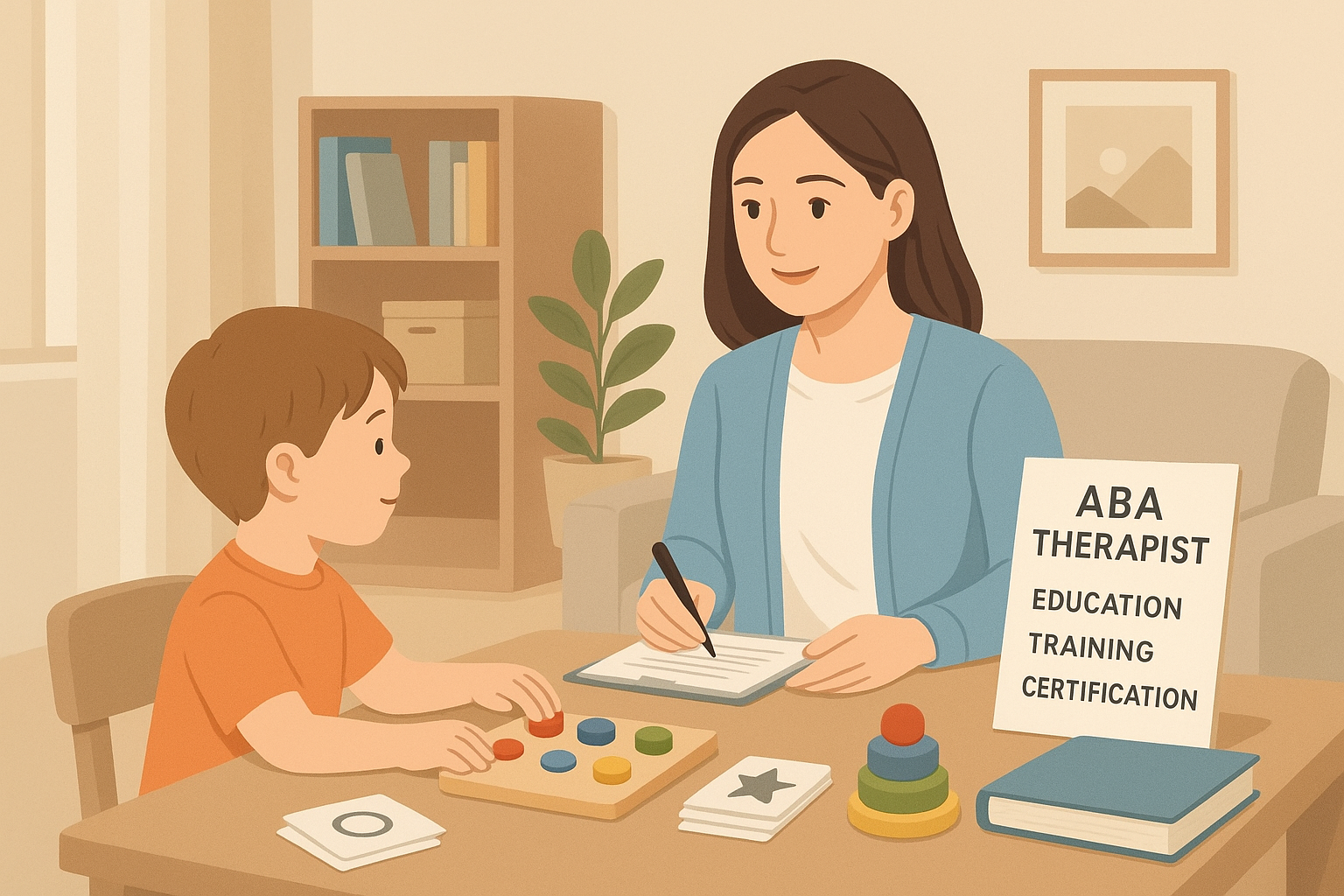
When you’re exploring aba therapist educational requirements, you’re really tracing the path your child’s clinician follows to become a skilled, ethical professional. In Greater Asheville, NC, inviting an in-home ABA therapist into your child’s daily routines brings both hope and questions: How does training translate into quality care? What credentials should you look for? And which steps in a therapist’s education most directly benefit your child’s progress?
Applied behavior analysis (ABA) relies on systematic methods to teach new skills and reduce challenging behaviors. A therapist’s educational journey—from undergraduate studies through advanced certification and continuing professional development—shapes the tools they bring into your home. By understanding each phase of their training, you can feel confident that your child is receiving evidence-based interventions from someone who not only knows the theory but also has real-world experience applying it.
Importance of requirements
Educational requirements for ABA therapists aren’t just bureaucratic hurdles. They represent layers of knowledge and supervised practice designed to ensure your child gets compassionate, competent support. Every course and exam focuses on core areas like behavior assessment, data analysis, ethical decision-making, and individualized intervention planning.
First, rigorous academic coursework gives therapists a strong foundation in learning theory and human development. Then structured fieldwork under an experienced mentor allows them to practice those theories in real life. Finally, certification exams verify that they can deliver measurable results while upholding professional standards.
In your home, this translates to personalized behavior plans that respect your family’s values and routines. A well-trained therapist tailors each session to your child’s strengths and challenges, constantly monitoring progress through data rather than guesswork. You’ll see them adjusting prompts, reinforcing successes, and refining strategies—all because they’ve mastered the principles behind each decision.
Building the undergrad foundation
The first formal step toward becoming an ABA therapist is earning an undergraduate degree in psychology, education, or a related field. Your future therapist’s bachelor’s program typically covers key topics like developmental psychology, basic research methods, and introductory behavior analysis.
Strong undergrad programs emphasize both theory and application. You want a therapist whose coursework included hands-on projects—observing behavior in classroom settings or conducting simple intervention studies. Those experiences spark critical thinking about how to measure behavior change and adapt methods for diverse learners.
Beyond core psychology classes, look for anyone who supplemented their studies with electives in special education or communication disorders. That background often gives therapists additional tools for working with children on the autism spectrum.
While most bachelor’s degrees take around four years to complete, your therapist may have pursued internships or volunteer roles in clinics, schools, or community programs during that time. Those early placements lay the groundwork for effective collaboration with families—and they prepare therapists to respect cultural and individual differences in real-world settings [1].
Pursuing graduate degrees
Most in-home ABA therapists who design and supervise individualized programs earn a graduate degree—often a master’s in Applied Behavior Analysis or a related field. That advanced coursework deepens their understanding of behavior assessment, treatment evaluation, and ethical practice.
Master’s in applied behavior analysis
A dedicated master’s in Applied Behavior Analysis (ABA) program centers on the science of behavior change. You’ll find classes on functional behavior assessments, single-subject research designs, verbal behavior training, and ethics in behavior analysis. Many programs require a capstone project or thesis where students analyze data from real cases—experience that translates directly into improved outcomes for your child.
Other master’s options
Some therapists pursue master’s degrees in psychology with an ABA concentration or special education programs that include behavior-based interventions. While these options may not dive as deeply into experimental design, they often offer broader perspectives on learning styles, curriculum development, and family systems. Both paths can lead to strong clinical practice, but be sure your therapist’s program included dedicated ABA coursework and supervised fieldwork [2].
Generally, graduate programs take two to three years, combining classroom learning with hundreds of supervised hours in clinical or school settings. During these placements, therapists refine skills in data collection, one-on-one instruction, and parent training—exactly the competencies that matter most when supporting your child at home.
Earning certification and licensure
Academic degrees build knowledge, but certification and licensure confirm that a therapist can apply that knowledge safely and effectively. In the ABA field, there are multiple credential levels, each with its own requirements.
Certification levels
| Credential | Required degree | Experience | Certification exam |
|---|---|---|---|
| Registered Behavior Technician (RBT) | High school diploma | 40-hour training | RBT exam |
| Board Certified Assistant Behavior Analyst (BCaBA) | Bachelor’s degree | Supervised practical experience | BCaBA exam |
| Board Certified Behavior Analyst (BCBA) | Master’s degree | Supervised fieldwork | BCBA exam |
The Registered Behavior Technician credential focuses on implementation skills, preparing therapists to carry out behavior plans under BCBA supervision. The BCaBA serves as an assistant analyst, capable of conducting assessments and designing interventions at a basic level. Finally, the BCBA—your child’s lead clinician—oversees assessment, program design, staff training, and progress evaluation.
State licensure requirements
Beyond national certification, some states require ABA therapists to hold a professional license. North Carolina does not currently mandate a separate ABA license, but your therapist must adhere to the Behavior Analyst Certification Board’s ethics and practice standards. If your child ever transitions to services in nearby states, you’ll want to confirm any additional credentials or state-specific endorsements to ensure continuity of care.
Exploring specialized training
Once therapists hold their core credentials, they often pursue specialized training to sharpen particular skills. In home-based settings, look for professionals who have completed focused courses in areas like verbal behavior, social skills training, or functional communication.
Registered behavior technician preparation
If your child receives services from an RBT, check for training platforms aligned with the RBT Task List and relevant standards. Quality programs include expert-led audio, video demonstrations of real sessions, interactive quizzes, and a final exam you can trust to verify competence. Some courses offer bonuses—like extra coaching points for Dutch learners—though your primary focus should be on clear, practical instruction [3].
ABAT and IBT training options
For therapists pursuing ABAT (Assistant Behavior Analyst Technician) or IBT (Intensive Behavior Technician) credentials, comprehensive 40-hour courses are essential. The best training covers data collection techniques, behavior reduction protocols, and team collaboration strategies. Many providers now offer blended online and in-person modules, letting therapists complete foundational work remotely before refining hands-on skills in a supervised clinic environment.
Specialized workshops can also deepen expertise in verbal behavior assessments like the VB-MAPP, or in using technology tools for data tracking. Ask potential therapists which electives or certifications they hold—those extras often translate into more engaging, effective sessions for your child.
Embracing ongoing development
ABA is a dynamic field. New research on reinforcement strategies, ethics, and neurodiversity perspectives emerges every year. That means great therapists never stop learning—they invest in continuing education and mentorship long after initial certification.
Continuing education units
Board Certified Behavior Analysts and Assistants must earn a set number of continuing education units (CEUs) to maintain their credentials. Quality providers like Above & Beyond Therapy offer bite-sized courses on topics ranging from intervention planning to cultural competence, helping therapists stay up to date without disrupting client schedules [4].
Supervision and mentorship
Ongoing supervision isn’t just for new BCBAs. Even seasoned analysts benefit from case reviews, peer consultation, and leadership training. Therapists engaged in formal mentorship demonstrate a commitment to high standards and accountability—qualities that show up in more nuanced, responsive sessions with your child.
Selecting your therapist
With so many credential levels, specializations, and program designs, choosing the right in-home ABA therapist can feel overwhelming. In Greater Asheville, NC, you want someone who not only meets national standards but also fits your family’s style and your child’s personality.
When you interview prospective therapists, consider asking:
- What educational background and certifications do you hold?
- How many supervised hours of experience do you have working with children on the autism spectrum?
- Which ABA methods do you find most effective in home settings?
- How will you involve me in goal-setting and progress monitoring?
- Can you provide references or case studies from other families in Asheville?
That conversation reveals a lot about their training, communication style, and willingness to tailor services to your household routines. Your child deserves an ABA professional who blends solid academic credentials with warmth, flexibility, and real-world savvy.
Your next steps
You’ve learned how college coursework, graduate studies, certification exams, specialized training, and lifelong learning build the foundation for skilled, compassionate in-home ABA therapy. Armed with this knowledge, you can confidently assess aba therapist educational requirements and find the clinician best suited to guide your child’s growth.
Start by requesting resumes or CVs from local providers, then schedule brief phone consultations. Your questions will spotlight a therapist’s strengths and areas of expertise, helping you make an informed decision. When you find a good fit, you’ll know that every lesson, data point, and milestone reflects a rigorously trained professional committed to your child’s success.